Average Reviews:

(More customer reviews)Are you looking to buy Confederate Ironclad vs Union Ironclad: Hampton Roads 1862 (Duel)? Here is the right place to find the great deals. we can offer discounts of up to 90% on Confederate Ironclad vs Union Ironclad: Hampton Roads 1862 (Duel). Check out the link below:
>> Click Here to See Compare Prices and Get the Best Offers
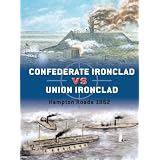
Confederate Ironclad vs Union Ironclad: Hampton Roads 1862 (Duel) ReviewUp front, readers should be aware that the title of this new volume in Osprey's Duel series, Confederate Ironclad vs Union Ironclad: Hampton Roads 1862, is misleading. While the bulk of the volume does focus on the battle between the USS Monitor and the CSS Virginia on March 9, 1862, the author does cover other ironclad vs. ironclad actions, albeit in much less detail. Since Osprey has previously covered the battle in a campaign series volume, some readers might be wary about purchasing what may appear to be redundant coverage. In fact, this volume takes a more in-depth look at the technology and the crews than the campaign volume on Hampton Roads, offering an altogether different take on the famous battle. Overall, it is a good volume in the series and well worth adding to any Civil War library.Easily the best part of this volume is the 18-page section on design and development of the Virginia and the Monitor. The author has a knack for teasing out new facts even about these two well-known warships and offers a very solid overview of both their strengths and weaknesses. The full-page cutaway diagrams of each ship, detailing interior features, are superb. The author follows up with a section on technical specifications that provide additional information and color plates on the cannons on each warship and their ammunition. The section on combatants does not include any profiles as in other Duel-series volumes, but it does provide an insightful look into the composition of the crews on each ship. In the section on the strategic situation, the author lays out the North's need to mount a blockade to starve the South into submission and the Confederacy's solution of building ironclads to break the blockade. Although the author alludes to the fact that virtually all Confederate ironclads (except for the CSS Stonewall, which is not mentioned in this book) were too deep-draft to operate effectively in shallow river channels but too unseaworthy to operate at sea, he doesn't quite connect the dots here that the Confederacy was investing enormous effort into ships which really couldn't accomplish the mission. While the Virginia was capable of sinking some wooden Union warships in a river, the Confederate ironclads would have had much more difficult engaging Union blockaders off Charleston or other ports, since the Union ships could withdraw out to sea where the ironclads could not follow. At best, the Confederate ironclads might have forced the Union to maintain a looser, offshore blockade but they simply could not hunt down and destroy large parts of the Union fleet.
The section on combat is only 14-pages long (only 7 pages of text) and focuses squarely on the Monitor vs. Virginia action. Two color battle scenes also complement this section. The author does make good points about the Virginia's lack of maneuverability and the Monitor's poor visibility, but much of this has appeared in other books as well. After a brief analysis of the battle, the author switches to look at the development of other ironclads by both navies and subsequent battles in 1863-64. Brief descriptions are provided on the battle on June 17, 1863 between the USS Weehawken and the CSS Atlanta and the August 5, 1864 action in Mobile Bay between the USS Chickasaw and the CSS Tennessee, along with one more color plate. The author should have provided greater detail on these other ironclad battles, in order to round out an overall assessment of the duel between these opposing weapon systems. Towards the end, the author begins to digress a bit, covering the U.S. Navy's post-war neglect of its monitor fleet but essentially failing to off any conclusions about the outcome of the ironclad vs ironclad duel. It is fairly clear however, that the Confederacy got far less from its investment in building ironclad warships that the Union did. It is also clear that monitor type vessels armed with 15-in guns had superior firepower and operational mobility compared to the Confederate deep-draft casemated ironclads. Indeed, the Confederate ironclads were little more than an evolved form of floating battery, while the monitors were the basis for a completely new type of warship. Overall, a good volume, but it could have used a bit sharper assessment of the duel's outcome.
Confederate Ironclad vs Union Ironclad: Hampton Roads 1862 (Duel) Overview
Want to learn more information about Confederate Ironclad vs Union Ironclad: Hampton Roads 1862 (Duel)?
>> Click Here to See All Customer Reviews & Ratings Now

0 comments:
Post a Comment