Average Reviews:

(More customer reviews)Are you looking to buy Top Gun: The Navy's Fighter Weapons School (The Presidio power series)? Here is the right place to find the great deals. we can offer discounts of up to 90% on Top Gun: The Navy's Fighter Weapons School (The Presidio power series). Check out the link below:
>> Click Here to See Compare Prices and Get the Best Offers
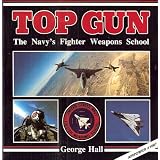
Top Gun: The Navy's Fighter Weapons School (The Presidio power series) ReviewThis small, thin book was the book I couldn't stop coming back to in the late 1980's along with Heatley's "The Cutting Edge". George Hall, a civilian photog, gets an inside look at the men and machines of the Navy's Fighter Weapons School. With the notoriety bred of the movie (which had just been released), Hall was likely one of many looking to get an inside look. Unlike Heatley, Hall is not a fighter pilot (or any kind). However, "Top Gun" manages to imbue his pictures and words with a sense of what it feels like to ride a rollercoaster, and presumably what it's like to fly in a high performance airplane. Rather than a book with some nice pictures and a few spare words, Hall locks on to what an incredibly challenging yet irresistible job being a fighter driver must be. While software makers had begun publishing the first generation of flight simulator games, convincing everybody with an AppleII, Macintosh or "IBM compatible" computer that they too can be a "Top Gun", Hall's perspective reminds us that those who fly fighter aircraft are dedicated professionals who worked hard to achieve their positions and remain tireless in their efforts to keep themselves and their fellow drivers on top. In short order, Hall covers the history of air combat - from the days of the "Red Baron" until modern times (okay - 1987). In between, we have German pilots inventing Blitzkrieg, the heroism of the RAF in the battle of Britain, early bouts of transonic warfare in the Korean skies and the heartbreaking disappointment of the first generation BVR (beyond visual range) missiles of the Vietnam era.Hall's no pilot - a point that he never lets us forget. However, Hall exploits what others would be a weakness, giving his story a rare objectivity. (Similar work would be stunted by empty adulation that praises fighter pilots without detailing the challenges they face). Hall also manages to find bits of irony in the history of air combat: Oswald Boelke crafts a set of basic rules of air combat, then dies in a mid-air collision having apparently forgotten the last rule; Allied pilots faced severe disadvantages in Korea in terms of geography, enemy numbers, politics and hardware - yet scored incredible kill ratios over enemy MiGs; though equipped with mach-2 fighters, the Argentines lose the air war over the Falklands - due to inadequate range and a lack of tanker support - to RAF pilots who have crossed thousands of Atlantic miles; though equipped with a state-of-the-art fire-control system, drivers of supersonic F-4 Phantoms find themselves matched by MiG-17 pilots (the MiG-17 was a barely transonic descendent of a fighter Kurt Tank designed for the Luftwaffe at the end of WWII); the star of "Top Gun", the F-14, is not only easy to spot in a dogfight, but equipped with an underpowered and unreliable engine - not considered a dogfighter, it was probably one of the last aircraft of its time contemplated for Top Gun.
Hall fills the book with the lore of FWS and air combat in general, with references to "Fighter Combat: Tactics and Maneuvering" by Robert Shaw; the epic final dogfight of Randy "Duke" Cunningham; and the legendary Joe "Hoser" Satrapa, a fierce and fearless aviator dragooned into training newer pilots. "Hoser" stories make him sound like a cross between R Lee Ermey and the Great Santini. Satrapa is normally credited with the phrase "there's no kill like a guns kill". Hall is also the primary source for oft circulated legend of Satrapa "cheating" during a bout of mock dogfighting that occurred during the ill-famed ACEVAL fiasco (Satrapa "arranged" with his rival to shun missile tactics, and keep their battle "guns only"; instead, Satrapa dispatches his foe with simulated missile kills, twice. Hardly a slap at Satrapa, the instance only reveals an unflagging focus on what air combat is all about - Credibility is DOWN, kill ratio is UP!".
If Hall's pictures aren't spectacular, (though I thought they were) he matches them well with his words. Noting unfavorable comparisons of the F-14 due to its size (bigger planes are easier to spot in dogfighting, and the first to spot has an advantage that's hard to beat) are matched with a priceless picture of a mammoth F-14 flanked by its diminutive Top Gun stable mates - the Skyhawk and the Tiger-II. Obviously dated (the star in 1987, the F-14 is already being phased out in favor of the "Super Hornet", and is expected to become aero-history by 2010) "Top Gun" is nevertheless a priceless inside look by an outsider who manages to be awed by what he sees without losing his own focus.Top Gun: The Navy's Fighter Weapons School (The Presidio power series) Overview
Want to learn more information about Top Gun: The Navy's Fighter Weapons School (The Presidio power series)?
>> Click Here to See All Customer Reviews & Ratings Now

0 comments:
Post a Comment