Average Reviews:

(More customer reviews)Are you looking to buy The fighting ships of the Rising Sun: The drama of the Imperial Japanese Navy, 1895-1945? Here is the right place to find the great deals. we can offer discounts of up to 90% on The fighting ships of the Rising Sun: The drama of the Imperial Japanese Navy, 1895-1945. Check out the link below:
>> Click Here to See Compare Prices and Get the Best Offers
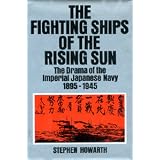
The fighting ships of the Rising Sun: The drama of the Imperial Japanese Navy, 1895-1945 ReviewPlease note - this review is based on my hardcover edition. I believe that this is the same as the paperback edition, but I do not know if the photographs in the paperback edition are printed on glossy photo paper.I liked this book enough to give it five stars, but a potential reader should be forewarned that the title is somewhat misleading. A reader expecting a book full of ships dueling on the high seas is apt to be disappointed. There are some tales of fighting ships, but they are only ancillary to the story of the development of the Imperial Japanese Navy. I think that the title of the original British edition "Morning Glory: The Drama of the Imperial Japanese Navy", more accurately reflects the fact that this is a book about the Imperial Japanese Navy, not just about its fighting per se. The book covers the whole history of the Imperial Japanese Navy, from its inception in the late 1800's to its death in 1945. It covers some of its significant engagements, but the descriptions of the battles are perfunctory at best. The book contains five maps, but while helpful they are not very detailed. It also contains 35 glossy photographs depicting admirals, sailors, ships, naval engagements and their aftermath.
While the book is nominally about how the Imperial Japanese Navy developed, it is actually about much more. It is about how a nation that isolated itself from the rest of the world for over 200 years, even to the extent of making the construction of oceangoing ships a criminal offense, punishable by death, developed a navy that became world class "almost overnight". The book also seeks to explain, why "the Imperial Navy was so victories at first, was so utterly defeated in the end". Why did its strategies first succeed magnificently, then fail miserably? Why, given that obedience and the specific imperial command that naval men should not become involved in politics, were naval officers in the 1930's able to murder and assassinate senior officers and politicians, and then be publicly seen as heroes? The book explains the root of the feeling of superiority that the navy developed after easy victories over the Chinese and Russians at the end of the 19th and beginning of the 20th centuries, and how this led to their underestimate of the capabilities of the US Navy. It shows how the peace treaties signed after these wars were forced upon them by the western powers, which led to a feeling that they were cheated out of the reward that a victor was entitled to, leading to a feeling of resentment and a zeal to show the rest of the world that Japan was at least their equal. The book explains that the navy was tutored by the British Navy and the army by the German Army and how this led to vastly different views of the world and how to interact with it, and how this helped foster a rivalry that was so intense that sometimes it overshadowed the rivalry against foreign adversaries, leading to a disastrous lack of support and coordination. The book shows why the Navy leadership wanted to avoid WWII, but felt that the Army led them, and the nation, into it.
While only about 40% of the book is about WWII per se, the book focuses on how prior events led Japan into the war. It tries to explain the mindset that made the Japanese believe that since they viewed themselves as being weaker than their adversaries all of their actions were defensive, regardless of the fact that history and the rest of the world viewed them as being overtly offensive. The book tries to explain the mindset that allowed a Kamikaze pilot to view his impending death as not being an act of suicide.
While not an apology for the actions of Japan and the Navy in particular, the author shows an obvious fondness for the institution of the Imperial Japanese Navy that may be off-putting for some readers. (There is a brief discussion of Naval atrocities against enemy sailors and civilians, which the author feels, and most other historians concur, were much less than that perpetrated by the Japanese Army.)
The book is well written and insightful. I highly recommend it to serious students of WWII, as it not only tells the history of the Japanese Navy, but also gives remarkable insight into the thinking of the Japanese in general and the Navy in particular. This is, in my opinion, definitely a very good five-star book, but one that will be of more interest to those wanting a fuller understanding of the Japanese Imperial Navy, as opposed to someone who just wants the story of "fighting ships" and naval battles.
The fighting ships of the Rising Sun: The drama of the Imperial Japanese Navy, 1895-1945 Overview
Want to learn more information about The fighting ships of the Rising Sun: The drama of the Imperial Japanese Navy, 1895-1945?
>> Click Here to See All Customer Reviews & Ratings Now

0 comments:
Post a Comment