Average Reviews:

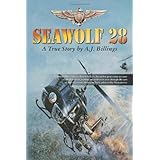
(More customer reviews)Are you looking to buy Seawolf28: Branded a Maverick as a Junior Officer this is a true account of naval aviation as seen through the eyes of one of the most decorated Navy pilots of the Vietnam era? Here is the right place to find the great deals. we can offer discounts of up to 90% on Seawolf28: Branded a Maverick as a Junior Officer this is a true account of naval aviation as seen through the eyes of one of the most decorated Navy pilots of the Vietnam era. Check out the link below:
>> Click Here to See Compare Prices and Get the Best Offers
Seawolf28: Branded a Maverick as a Junior Officer this is a true account of naval aviation as seen through the eyes of one of the most decorated Navy pilots of the Vietnam era ReviewAl Billings was a "Silver Star and Distinguished Flying Cross" winner, a Helicopter Aircraft Commander with 600 missions flown as a member of the Seawolves during the 1968 "Tet Offensive," considered by most the climax of the Vietnam War. "Seawolf 28" allows you travel back in time and fly with Billings on nine incidences of potentially deadly engine failures, all of which he was able to safely bring his aircraft on the ground. This memoir will bring you incredible acts of heroism, dedication and steadfastness, and also exposes deeds of irresolution, vacillation, and faintheartedness. It is all here, finally chronicled, in a memoir that Billings presents himself as a man that tried to overachieve in a Naval hierarchy constrained by his own set of principles. Unfortunately, some of his standards were radically opposed to the attitudes, constitutions and values of the officers and commanders he served with and described in this memoir, and in that regard Billings would not compromise his positions to bridge this. Fire from the Sky: Seawolf Gunships in the Mekong Delta He perceived that there were instances where some of the top echelons of authority in the U.S. Navy were officers that achieved this rank other than by personal achievement and qualifications. These officers received choice assignments and gave each other reciprocally glowing fitness reports, with their primary concern being the advancement of their own career as opposed to the safety and welfare of the enlisted man, who were the people that made it all possible. The author's memoir is based on a span of a 22 year Naval career, occurring during both a war and later a peace setting.The time period Billings set foot in Vietnam is critical, as 1968 was a year unlike anything America ever had or will experience again. At issue was Billings individuality, which was at odds with the Naval commanders, admirals, and officers he served under. Therefore, a confrontation between them was inevitable and as a consequence, a naval grapevine of derogatory gossip evolved giving rise to a stigmatizing blemish on his character, one that he could never shed regardless of his spectacular accomplishments. Nevertheless, this memoir was not written to castigate nor disparage, as Billings reminisces that his Naval experiences and the men he served with were the greatest he has ever known, and would identically relive his life the same way if given the chance. Seawolves: First Choice The author's origin is from Los Angeles, and in 1968 the "City of Angels" was notorious for its nonconformist, free spirited hippie scene and vibrant beat culture. Images of Billing's antecedents brought to mind the Venice coffeehouses, Hollywood's "Sunset Strip" with its innovative rock clubs like the "Whisky-a-Go-Go" and the "Troubadour." Los Angeles and 1968 became synonymous with famous rock bands like "The Doors, Buffalo Springfield," and a Hollywood produced show that made its debut on January 22 of that year. Graphic images of America's first "television war" made the dinner hour, showing the nation a soldier's widow, baby in arms, reading one of her husband's last letters from Vietnam which competed for air time with "Laugh In," a new show that boasted shapely chicks in acid-colored bikinis and mod flowered body paints.
America now had a prime time choice of watching reports of Marines using "Zippo" lighters to burn suspected Viet Cong civilian huts on "search and destroy" operations juxtaposed with wildly costumed pranksters spouting sexually hip one-liners, hosted by two swinging bachelor types, the comedy team of Dan Rowan and Dick Martin. Out of this background the legend emerged of an irrepressible, cigar chomping Al Billings, forever forward known as "Hollywood Al." In his quest for self discovery, the engine failures, medals and awards and even his wartime service paled in comparison to the confrontations he was destined to face with senior officers he did not see eye to eye with. U.S.Navy Seawolves: The Elite HAL-3 Helicopter Squadron in Vietnam Regardless of the issues, his detractors found that Billings held values and core beliefs that he would permanently adhere to and wouldn't change for anyone, regardless of the consequences. Billings leaves it up to the reader to give the final verdict as to whether the confrontations described in this memoir arose because of his intransigence or his own personal rebelliousness. After enlisting, twenty year old Al Billings started his quest by flying five hours cross country from Los Angeles to Pensacola, Florida, his first day as a Naval Cadet.
It was January of 1965, six months after the North Vietnamese regime supposedly conducted two deliberate attacks against U.S. Naval vessels operating in the international waters of the Gulf of Tonkin. U.S. President and Commander in Chief Lyndon B. Johnson was determined to take what he deemed: "All necessary measures to repel any armed attack against the forces of the U.S. and to prevent further aggression." Johnson, the consummate salesman, had his infamous "Johnson Treatment" working on August 7th, 1964. Calling on his domineering personality and his blend of coercion, LBJ successfully pushed, pulled, cajoled and rammed the "Gulf of Tonkin Resolution" past Congress. However in this case, the ultimate price would turn out to be incalculable, resulting in 58,212 Americans killed, 153,452 wounded, and 1,711 unaccounted for. This resolution, while it gave him the exclusive right to use military force without consulting the Senate, he would later confess was based on a false pretext. By the end of 1964, there were approximately 23,000 U.S. military personnel in South Vietnam, and 1,278 wounded. With LBJ's resolution, America's direct involvement in the ground war in Vietnam commenced. By the time Billings arrived in February of 1968, over 550,000 American soldiers were in country and were being killed at the rate of over 1,000 a month. One thing LBJ didn't include in his "Great Society" was the Naval Cadet Program Billings reported to, and the author admits that if it hadn't been for this conflict, this program would have gone by the wayside.
While still seeking his personal identity, Billings explained that college just didn't cut it for him, and his sole focus became as follows: "Becoming a naval aviator was what I wanted, and I was willing to make whatever sacrifices that were necessary to achieve that goal. The skills and concentration required to land a high-performance aircraft aboard a pitching carrier deck in the black of night seemed to be the challenge I was looking for." Unfortunately, some of the early superior officers he ran into were imperfect in their tactics of leadership. In his first week at the Naval Academy, the first ten days were a period of indoctrination, with all cadets being tested. Billings had one particular cadet officer that excessively rode him until he snapped. Admitting that he had a bad temper, Billings qualified it, asserting the following: "Even back then, I had trouble with people abusing their authority." With the moniker of irascibility being the first of many bad reputations to follow him, this officer warned Billings that he would never graduate from flight training if he couldn't control his temper. War on the Rivers: A Swift Boat Sailor's Chronicle of the Battle for the Mekong Delta His reaction was far from being intimidated: "Nothing was going to stop me from becoming a naval aviator. I had never failed at anything, and I was not about to start."
When ordered to stand at attention during room inspection and to control his emotions, Billings noted: "Back then I was full of life and every day was an adventure. I even smiled a lot, sometimes too much. You weren't supposed to smile. I can remember one time during a room inspection I got put on report for breaking out in uncontrolled laughter." If nothing else, the nine engine failures, the ocean burials of some of his friends and Vietnam would put quite a damper on his sense of humor. Al Billings was about to find out about human error and that by following an officer's orders that didn't sound right could cost one their life. While still in training as a Naval Aviation Cadet, Billings noticed a chasm in rank: "Some officer candidates felt that it was beneath them to listen or even speak to the cadets." Throughout this memoir, Billings insists throughout his career he treated all men, enlisted and officer alike with respect, completely lacking any pretentious airs of superiority. A Dragon Lives Forever: War and Rice in Vietnam's Mekong Delta 1969-1991, and Beyond Several instances in this memoir he was warned by different officers about his fraternization with enlisted men under him, a warning which Billings simply ignored. Billings saw that there were instances where it was necessary to disregard a superior officer's commands. When do you draw the line between common sense and obedience? If Hitler's Concentration Camp guards had refused to obey the Fuhrer's orders, the Holocaust might never have happened. Ditto with The "My Lai Massacre" where the men of "Charlie Company," part of the Americal Division listened to and obeyed Lt. William Calley's orders. Tragically, the result was the mass murder of 347-504 unarmed citizens in South Vietnam.
In "Flight Training," Billings noticed that the officers that felt it was inappropriate to listen or even speak to...Read more›Seawolf28: Branded a Maverick as a Junior Officer this is a true account of naval aviation as seen through the eyes of one of the most decorated Navy pilots of the Vietnam era Overview
Want to learn more information about Seawolf28: Branded a Maverick as a Junior Officer this is a true account of naval aviation as seen through the eyes of one of the most decorated Navy pilots of the Vietnam era?
>> Click Here to See All Customer Reviews & Ratings Now

0 comments:
Post a Comment